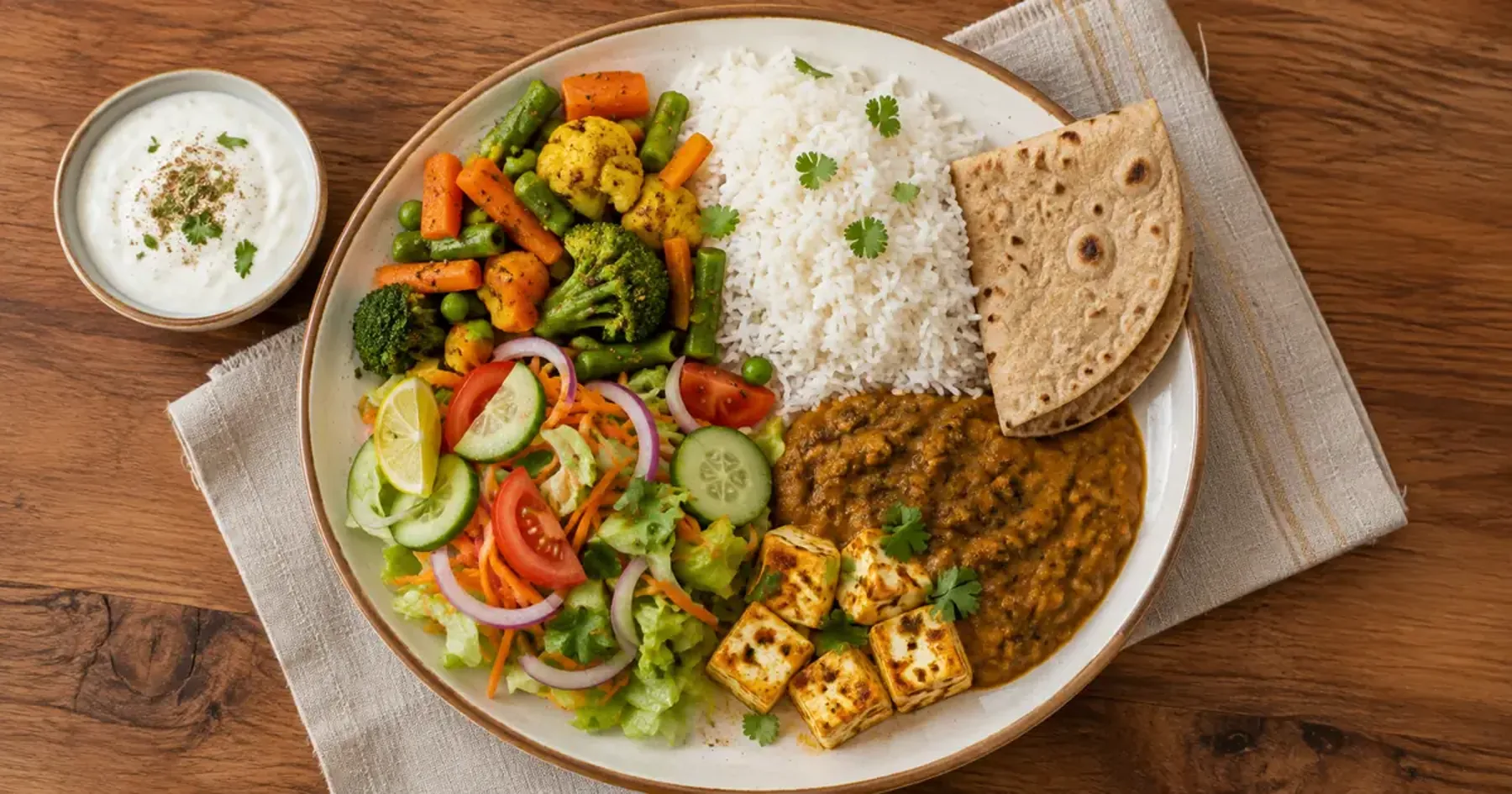
A balanced meal does not have to look like a bowl of quinoa, raw leaves and unfamiliar ingredients. It can be made from the food already cooked in your home: dal, rice, roti, sabzi, curd, paneer, eggs, fish or chicken.
The challenge is usually not the food itself. It is how the different foods come together on the plate. Sometimes rice or roti takes up most of the space, while vegetables and protein appear only in small amounts. On other days, a meal may look healthy but still leave you hungry because it was too light or did not contain enough variety.
A balanced Indian meal plate offers a simple way to look at the whole meal. As a flexible starting point, let vegetables fill roughly half the plate, use about one quarter for grains or other starchy foods, and keep the remaining quarter for a suitable protein source.
These are not strict measurements. Think of the plate as a reminder, not a ruler.
What Does a Balanced Indian Meal Plate Mean?
A balanced plate brings together different food groups so that one ingredient does not have to do everything.
Rice and roti provide carbohydrates and energy. Dal, beans, eggs, dairy, soy, fish and chicken can contribute protein. Vegetables and fruit provide fibre, vitamins, minerals and a wide range of naturally occurring plant compounds. Nuts, seeds and cooking oils supply fats and make meals more enjoyable.
The World Health Organization describes adequacy, balance, moderation and diversity as the four foundations of a healthy diet. It also makes an important point: the exact diet will look different depending on a person’s age, activity, health, culture and locally available foods.
This means there is no single “perfect plate” that everyone must copy. A student, an older adult, a pregnant woman and someone doing physically demanding work may all need different amounts of food.
How to Build a Balanced Indian Meal Plate
You do not need a weighing scale or calorie-counting application. Start with the meal in front of you and check whether the main parts are present.
1. Let Vegetables Take Up Plenty of Space
Aim for vegetables and salad to occupy around half of the plate when practical.
This could include bhindi, beans, cabbage, cauliflower, bottle gourd, spinach, carrots, brinjal, pumpkin, okra, cucumber, tomatoes or any seasonal vegetables available in your area. There is no need to buy imported produce.
Both cooked and raw vegetables can fit. A meal may include one cooked sabzi and a small salad, or two different cooked vegetables. If raw food does not suit your digestion, you do not have to force yourself to eat a large salad. Properly cooked vegetables are still valuable.
Potatoes, sweet potatoes, corn and green peas contain useful nutrients, but they are also more starchy than most vegetables. When they form the main part of a sabzi, remember that the meal may need another non-starchy vegetable alongside it.
Fruit can be eaten with the meal or separately according to preference and digestion. Whole fruit is usually a better everyday choice than juice because it retains more of its natural fibre.
2. Keep a Sensible Place for Rice, Roti or Millets
The grain or starchy section may include rice, roti, jowar, bajra, ragi, oats, daliya or another familiar staple.
Rice and roti do not need to be banned. They are part of normal, culturally meaningful meals and can comfortably fit into a balanced eating pattern. The goal is to stop them from unintentionally crowding every other food off the plate.
When available and enjoyable, whole grains or less-refined grains can add variety and fibre. That does not mean white rice must disappear. A serving of white rice paired with dal, vegetables and an appropriate protein source creates a very different meal from a large plate of rice with only a little gravy.
You can also eat rice and roti in the same meal if you enjoy both. Simply use smaller portions so that there is still room for vegetables and protein.
3. Add a Clear Source of Protein
Protein is often the part of an Indian meal that receives the least attention. A small spoon of thin dal may not make the meal as satisfying as a fuller serving of dal or another protein-rich food.
Vegetarian choices include:
- Dal and other pulses
- Rajma, chana and lobia
- Paneer or tofu
- Soy chunks
- Curd or unsweetened yoghurt
- Sprouts
- Nuts and seeds
For people who eat animal foods, the options may also include:
- Eggs
- Fish
- Chicken
- Lean meat
You do not need every protein source in the same meal. Choose what suits your food preferences, budget and household routine.
Dal is valuable, but you can vary the type and thickness or occasionally combine it with curd, paneer, soy, eggs or another suitable food. Across the week, variety is more useful than depending on one ingredient every day.
4. Include Fats Without Fear or Excess
Oil, nuts, seeds and other fats help with flavour, cooking and the absorption of certain vitamins. A balanced meal does not have to be fat-free.
At the same time, fats are concentrated sources of energy. A meal can become unexpectedly heavy when several rich elements appear together, such as deep-fried food, creamy gravy, generous ghee and fried accompaniments.
Use cooking fats thoughtfully rather than treating them as either forbidden or unlimited. You can also obtain fats from peanuts, almonds, walnuts, sesame, flaxseeds and other nuts or seeds.
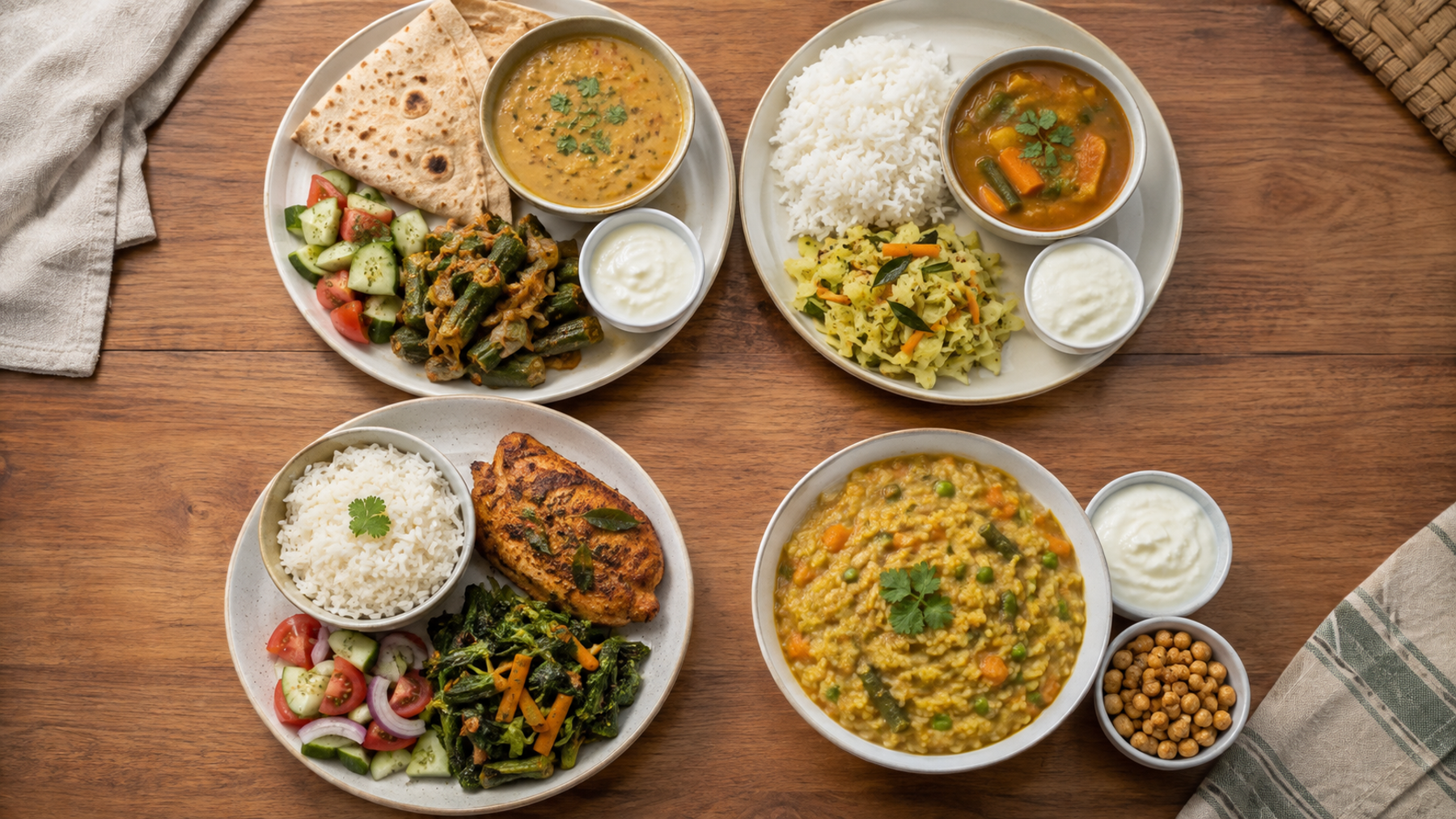
Four Practical Indian Plate Examples
The plate method becomes easier when you see how it works with ordinary food.
A North Indian Vegetarian Plate
You could combine roti or a moderate serving of rice with thick dal, bhindi or mixed-vegetable sabzi, cucumber and tomato salad, and a little curd.
If the sabzi is mainly potato, add another vegetable or salad to bring more variety to the meal.
A South Indian Vegetarian Plate
A practical meal may include rice, sambar, vegetable poriyal, curd and a small serving of salad.
Because the amount of dal in sambar can vary, you might occasionally add sundal, a thicker dal, an egg or another protein source that suits your preferences.
A Non-Vegetarian Plate
Combine rice or roti with fish, chicken or eggs, one generous vegetable preparation and some salad or curd.
The protein does not have to be deep-fried or covered in heavy gravy every time. Grilled, roasted, steamed and lightly cooked preparations can bring useful variety.
A Simple Budget-Friendly Plate
An affordable meal might include rice or roti, chana or dal, seasonal sabzi and curd. Peanuts, roasted chana, eggs and locally available pulses can also help create variety without requiring expensive “diet foods.”
Healthy eating should not depend on buying special powders, imported grains or products labelled as superfoods.
What About Khichdi, Pulao and Other One-Pot Meals?
Not every meal arrives in separate sections. Khichdi, pulao, poha, upma, noodles and mixed rice dishes combine several ingredients in one bowl.
The same idea can still be used.
Look at what went into the pot. Is it mostly rice, or does it also contain enough dal, vegetables and another suitable protein source? Could you add more vegetables during cooking, or serve the dish with curd, raita, an egg, sprouts or a side of chana?
You do not have to separate the finished meal into perfect quarters. The plate method is simply a way to notice what may be missing.
Balance the Meal by Adding, Not Only Removing
Many people begin improving their meals by asking, “What should I stop eating?”
A more helpful question is often, “What can I add to make this meal more complete?”
Instead of immediately removing rice, add dal and vegetables. Instead of eating only two plain rotis for breakfast, add curd, paneer, egg or a pulse-based preparation. If your mornings are rushed, the Uzmi Wellness guide to healthy breakfast ideas for busy mornings explains how to build a more balanced start to the day.
This approach feels less punishing because familiar foods remain on the plate. You are improving the overall combination, not placing individual foods into “good” and “bad” categories.
Common Plate-Building Mistakes
One common mistake is making the vegetable section too small. A few slices of cucumber are helpful, but they may not provide the same variety as a proper serving of sabzi alongside them.
Another is assuming that any meal containing dal is automatically high in protein. The amount, thickness and rest of the meal matter.
Some meals include rice, several rotis, potatoes and a sweet drink but very little protein or non-starchy vegetables. None of these foods is forbidden, but together they can crowd out other useful food groups.
It is also easy to forget what accompanies the plate. Papad, pickle, packaged sauces and salty snacks may be used in small amounts for flavour, but relying on them heavily can increase the meal’s salt content. Similarly, sweetened drinks can add a substantial amount of sugar without making the meal more nourishing.
The solution is not perfection. Notice the pattern and adjust what is realistic.
Can a Balanced Plate Support Weight Management?
A balanced plate can provide a useful structure for sustainable weight management, but it is not a weight-loss guarantee.
Body weight is influenced by total food intake, activity, sleep, stress, health conditions, medicines and many other factors. Simply arranging one meal into sections cannot control all of these.
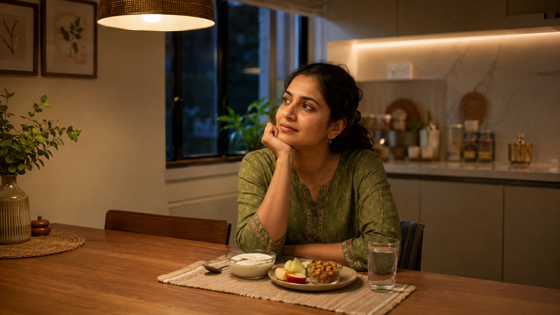
However, meals containing vegetables, an appropriate protein source, grains and enough total food may feel more satisfying than meals built mainly around one food group. If you often feel hungry soon after dinner, read why hunger can return at night even after eating. Sometimes the answer is not greater restriction. The original meal may need more balance or simply more food.
Pay attention to your hunger, comfort and energy rather than forcing yourself to follow identical portions every day. An active day may require more food than a quiet one.
When the General Plate Method Is Not Enough
The balanced-plate method is intended for general wellness education. It is not a treatment plan for diabetes, kidney disease, liver disease, digestive disorders, food allergies or eating disorders.
Children, teenagers, pregnant or breastfeeding women, older adults, athletes and people recovering from illness may also have different nutrition requirements.
Seek individual guidance from an appropriately qualified healthcare professional if you have a diagnosed medical condition, unexplained weight change, persistent digestive symptoms, unusual thirst, severe fatigue or continuing changes in appetite.
Start With Your Next Meal
You do not have to rebuild your entire diet tomorrow.
At your next lunch or dinner, pause before eating and look at the plate. Is there a vegetable? Is there a clear protein source? Has rice, roti or another starch taken over most of the space? What is one realistic addition you could make?
It might be an extra serving of sabzi, a bowl of dal, some curd or a boiled egg. Small changes that fit your real life are more likely to become lasting habits.
If you would like help adapting this method to your routine, preferences and wellness goals, you can explore the personalised support available through Uzmi Nutrition & Wellness.
This article provides general wellness education and is not a substitute for individual medical or dietary advice.
Sources and Further Reading
- ICMR National Institute of Nutrition: Dietary Guidelines for Indians 2024
- ICMR National Institute of Nutrition: My Plate for the Day
- World Health Organization: Healthy Diet
- Harvard T.H. Chan School of Public Health: Healthy Eating Plate
Frequently Asked Questions
What should a balanced Indian meal plate contain?
A flexible starting point is to fill roughly half the plate with vegetables, one quarter with rice, roti or another grain, and one quarter with a suitable protein source. The exact portions should change according to your hunger, activity and individual needs.
Can rice and roti be included in a balanced meal?
Yes. Rice and roti can both fit into a balanced eating pattern. Keep a sensible portion and leave enough room for vegetables and protein. You can also eat both together in smaller amounts if that suits your preference.
What are good vegetarian protein choices for an Indian plate?
Useful vegetarian options include dal, rajma, chana, lobia, paneer, tofu, soy, curd, sprouts, nuts and seeds. You do not need all of them in one meal. Use different choices across the week for variety.
Can the balanced plate method help with weight loss?
It can provide a practical structure for balanced meals, but it does not guarantee weight loss. Weight is also influenced by total food intake, activity, sleep, stress, medicines and health conditions. Individual guidance may be helpful.
Is this plate method suitable for someone with diabetes?
It is only a general visual guide. People with diabetes may need personalised advice about carbohydrate amounts, meal timing, medicines and blood-glucose management. Follow the plan provided by your doctor or appropriately qualified dietitian.
Need more support? Ask Uzmi AI, explore Health Tools, or book a free consultation.
Comments
Reader discussions will be available in a future platform update.